
Paint Correction in Austin, TX: Removing Swirls, Oxidation, and Hard Water Spots
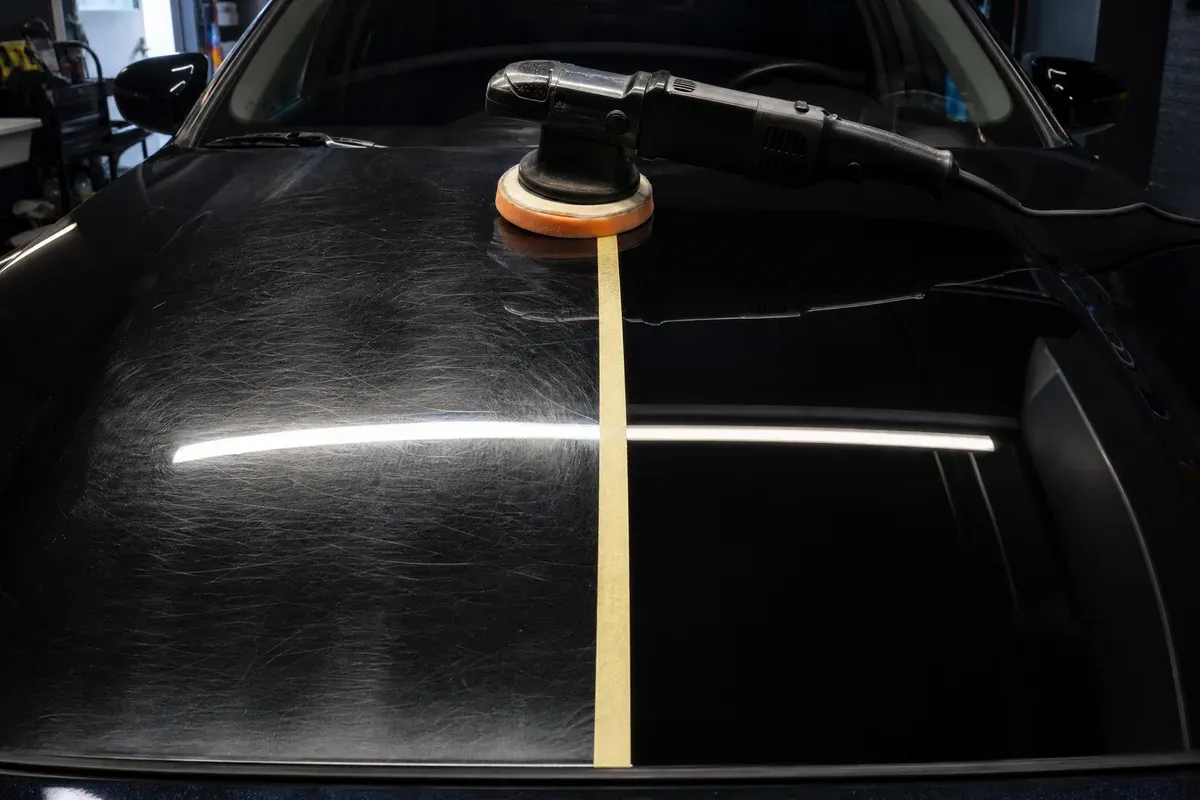
Paint correction in Austin, TX is the fix for the problems a wash cannot touch: fine circular swirl marks, a dull or chalky finish, and water spots that stay put no matter how hard you scrub. All three live in the top layer of the paint, and the only way to remove them is to level that layer with a machine polisher.
This guide explains where each defect comes from, how paint correction removes it, what correction honestly cannot fix, and how to keep the paint from going back to where it started. If your vehicle looks clean but never looks quite right, this is probably why.
What Paint Correction Is, in Plain Terms
Modern car paint has a colored base coat with a clear coat on top. The clear coat is what gives paint its gloss and depth, and it is also what takes the damage. Swirls, light scratches, oxidation, and etched water spots are all small defects in that clear layer.
Paint correction is machine polishing that removes a very thin amount of clear coat to level those defects out. When the surface is flat again, light reflects off it cleanly instead of scattering, and the paint looks clear and deep instead of hazy.
It is different from a wax or a glaze. Those products fill and hide defects for a few weeks. Correction removes them. That is also why it takes skill and time: the goal is to remove only as much clear coat as needed to fix the problem, and no more.
Swirl Marks: Where They Come From
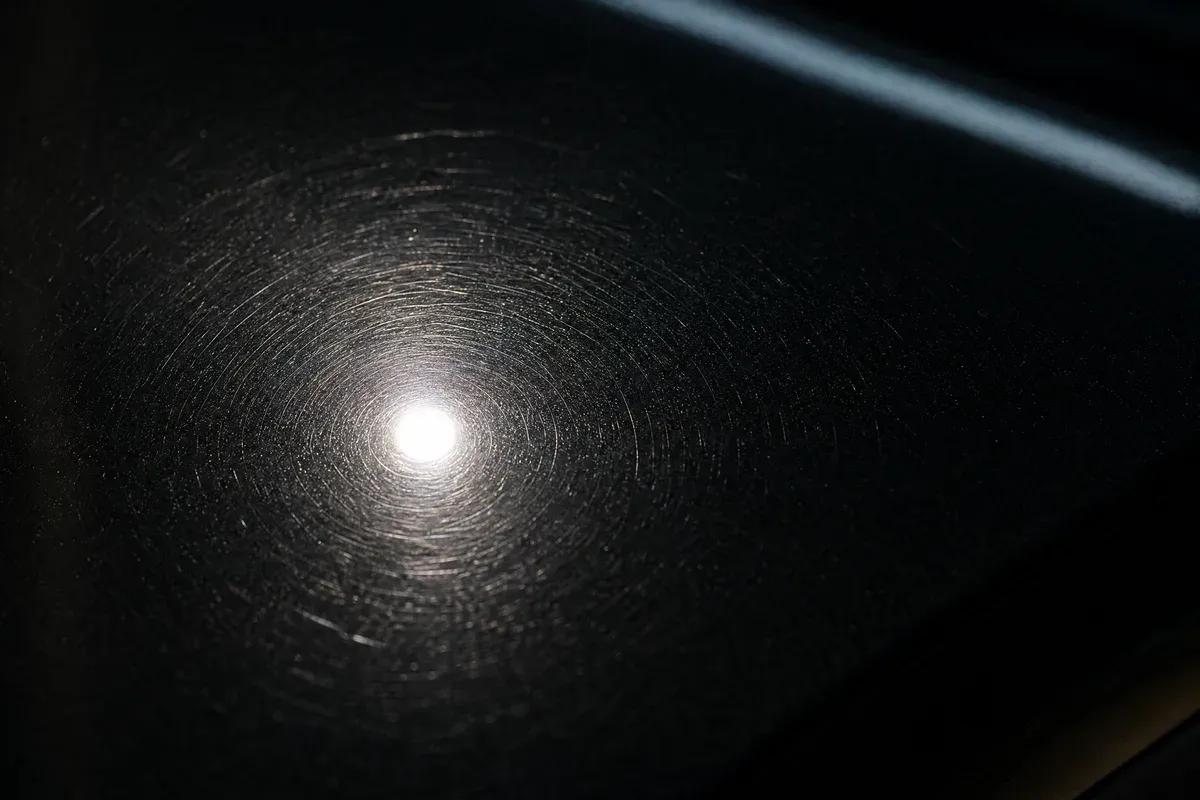
Swirl marks are fine, circular scratches you see when sunlight or a streetlight hits the paint. In direct light, they look like a spiderweb around the reflection. On dark vehicles, they can make the whole car look gray and flat.
Almost all swirls come from washing and drying. Automatic car washes with spinning brushes are the biggest cause, because the brushes carry grit from every car before yours. Dry wiping dusty paint, using a dirty towel, or washing with a single bucket does the same thing on a smaller scale.
The good news is that swirls sit near the surface of the clear coat. They are one of the defects that respond best to correction. In most cases, a properly done correction takes them out completely.
Oxidation: What Central Texas Sun Does to Clear Coat
Oxidation is what UV exposure does to paint over time. The clear coat breaks down, the gloss fades, and the surface turns dull or chalky. Red, black, and other dark colors tend to show it first, and the hood and roof go before the sides because they face the sun all day.
Central Texas sun is hard on clear coat, and oxidation shows up here years before many owners expect it. A vehicle parked outside in Austin every day can start to look tired long before it is old.
Light to moderate oxidation responds well to machine polishing and usually comes back clear and glossy. Heavy oxidation is different. When the paint is chalky to the touch or the clear coat has started to peel or flake, the clear coat itself has broken down. Polishing may still improve it a lot, but it will not fully correct, and we will tell you that before we start.
Hard Water Spots: Why Some Wash Off and Some Do Not
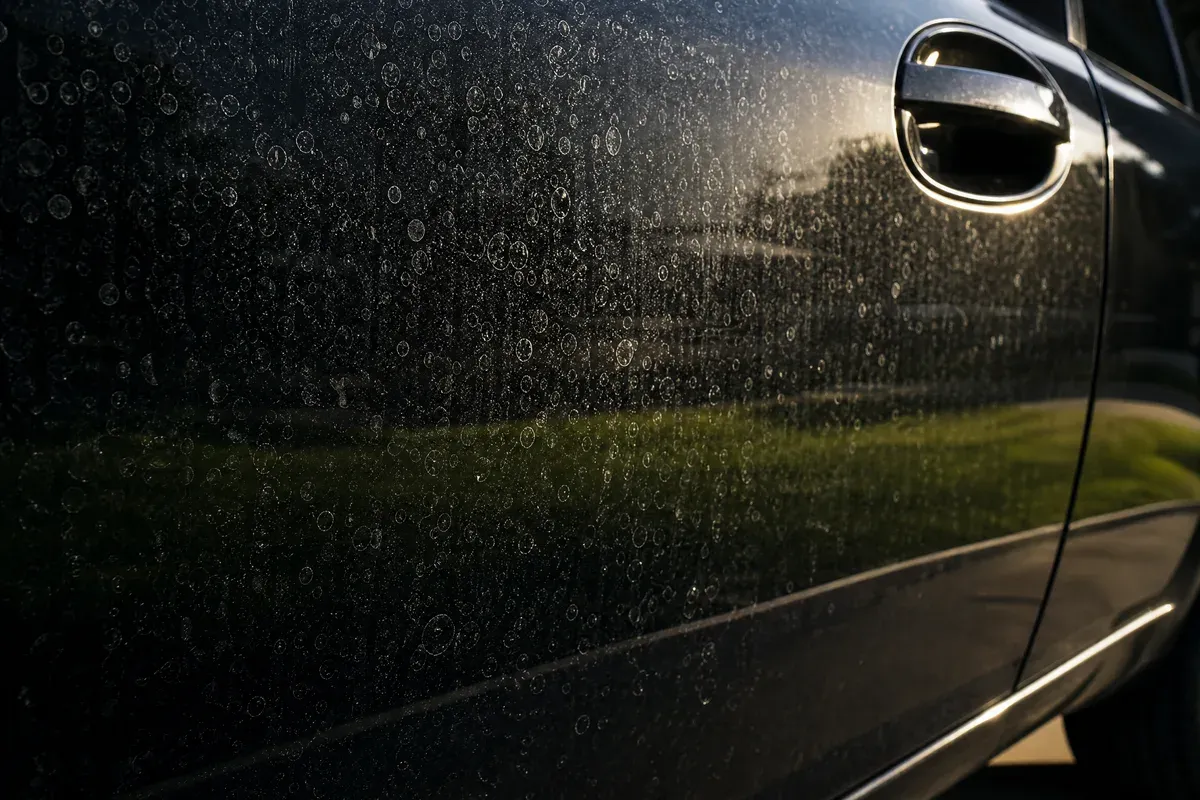
Central Texas water is hard. It carries a lot of dissolved minerals, and when it evaporates on paint, it leaves those minerals behind as white rings and spots. Sprinkler overspray is the usual cause, along with washing a car at home and letting it air dry in the sun.
Fresh water spots sit on top of the paint and can often be removed during a proper wash and decontamination. The problem is time and heat. Minerals left to bake on a hot panel can etch into the clear coat, leaving a faint ring that stays even after the paint is clean. Those etched spots are a defect in the paint, and they need polishing to remove.
Etched spots respond well to correction when they are shallow. Spots that have been left for a long time can go deeper, and like heavy oxidation, they may improve a lot without disappearing completely.
How a Paint Correction Job Runs
Every correction starts with a full wash and decontamination, followed by a clay bar treatment. Polishing over grit would drag it across the paint and create new scratches, so the surface has to be completely clean first.
Then we inspect every panel under raking light to map where the swirls, scratches, oxidation, and water spots are and where they are worst. Trim, badges, and rubber seals are masked off so the polisher does not touch them.
Next comes a test spot. We polish a small, out-of-the-way area first to see how the paint responds and how much correction it needs. That test decides the plan for the rest of the vehicle.
The cutting stage removes the defects. A refining polish follows to remove any haze left by the cutting stage and bring the paint to full clarity. Between passes, we check panels with a swirl-finder light. A final wipe-down with an inspection polish confirms the finish, and a wax or sealant goes on to protect the corrected paint.
Tamer spent about eight years running a car body shop before he moved into detailing, and this is the stage where that background shows. Knowing how paint is built, and how much of it is safe to remove, is what separates a careful correction from one that burns through a panel edge.
What Paint Correction Cannot Fix
Correction works inside the clear coat. Anything that has gone through the clear coat cannot be polished out. A simple test is your fingernail. If a scratch catches your nail, it is probably too deep for polishing alone and needs touch-up paint or a repaint.
Correction also cannot fix rock chips, peeling clear coat, or failed paint. In those cases, polishing can make the surrounding paint look better, but the damaged area will still show.
We would rather tell you this at the start than after you have paid for the work. During the inspection and test spot, we will show you which defects will come out completely, which will improve, and which will not.
Why Correction Happens at the Buda Shop
Most of what we do is mobile, but paint correction is booked at our shop in Buda. Correction depends on seeing the paint clearly, and outdoor light changes all day. In a controlled space, with consistent lighting and less dust, we can see exactly what each pass is doing.
Time is the other reason. A single-stage correction on a sedan takes a few hours, while a heavily swirled vehicle that needs multiple stages can take a full day. That is easier to do well in a shop than in a driveway in the afternoon heat.
Protecting the Paint After Correction
Corrected paint is bare paint with a fresh finish. Left unprotected, the same sun, washes, and water that caused the damage will start bringing it back right away.
Every correction finishes with a wax or sealant, which protects the paint for the near term. For longer protection, we recommend pairing correction with a ceramic coating. Correction is already the main prep step for a coating, so doing both together means the coating locks in a clear, freshly corrected finish.
Habits matter too. Skip brush car washes, wash with a pH-neutral soap and clean mitts, and dry the vehicle fully with microfiber instead of letting it air dry. Keep sprinklers off the driveway where the vehicle parks if you can. Regular upkeep, including an occasional full detail, keeps the finish clean between bigger jobs.
Signs Your Paint Needs Correction
Look at your vehicle in direct sun or under a single bright light at night. If you see circular scratches around the reflection, the paint has swirls. If the color looks faded or the surface feels rough or chalky, it has oxidation. If white rings stay on the paint after a good wash, the spots have etched.
Another sign is that a fresh wash no longer makes the vehicle look clean. When the paint looks dull even after it has been washed, the problem is in the paint, not on it.
If any of that sounds familiar, call us at (866) 780-7033 or request a quote. Send a few photos of the paint in direct sunlight and we will tell you what level of correction it needs before anything gets booked.
Frequently Asked Questions
Will paint correction remove all the scratches on my car?
It removes swirl marks, light scratches, and haze that sit in the clear coat. Scratches deep enough to catch a fingernail have gone past the clear coat and need touch-up paint or a repaint. We will tell you which category your paint falls into before we start.
Can paint correction remove hard water spots?
Yes, when the spots have etched into the clear coat but are still shallow. Fresh spots often come off during the wash and decontamination step. Spots left on hot paint for a long time can go deeper and may improve without disappearing completely.
How long does paint correction take?
A single-stage correction on a sedan takes a few hours. A heavily swirled vehicle that needs multiple stages can take a full day. We confirm the plan after the inspection and test spot.
Does polishing remove my clear coat?
Machine polishing removes a very thin layer of clear coat, which is how it levels out defects. We test spot every vehicle first and remove only what is needed to correct the paint safely.
Can you do paint correction at my house?
Paint correction is booked at our shop in Buda, where lighting and conditions are consistent. Most of our other services, like full and interior detailing, are mobile across Central Texas.
Should I get ceramic coating after paint correction?
We recommend it. Corrected paint left unprotected starts to swirl and oxidize again. A ceramic coating locks in the corrected finish and makes the paint easier to keep clean.
Find Out What Your Paint Needs
Send a few photos of your paint in direct sunlight. We will tell you which defects can come out, how many stages it needs, and when we can get it into the shop.
Book today